UPR Chevy & GMC Oil Catch Can Kits

Why GM's Gen V LT Engines Make a Compelling Case for a Catch Can

GM's 5.3L and 6.2L LT V8 engines are direct-injection. Fuel enters the cylinder directly, bypassing the intake ports entirely. That's an efficient combustion approach, but it creates a well-documented side effect: There's no fuel washing the intake valves on every cycle, as with port injection. The PCV system still vents crankcase blow-by gases through those ports continuously, and the oil vapor those gases carry deposits carbon directly onto the valve faces over time. In a port-injected engine, the fuel spray prevents deposits from accumulating. In a direct-injection LT, nothing does.

The Gen V platform made this problem more pronounced than earlier LS-based trucks. The 5.3L and 6.2L Gen V LT engines are among the highest-volume direct-injection V8s on the road, which means there's a significant body of real-world data on what carbon accumulation looks like at 60,000, 80,000, and 100,000 miles on trucks without a catch can. It shows up on a borescope as a thick carbon buildup on the back of the intake valves, and the only remediation is a chemical or mechanical walnut-shell blasting service that costs several hundred dollars at a shop.

A Chevy or GMC oil catch can intercepts that contamination before it ever reaches the intake. Oil vapor enters the billet aluminum body, passes through UPR's 4-stage diffuser and stainless steel coalescing media, and drops into the reservoir. You drain it at your next oil change. What comes out would have otherwise coated your intake valves. It's a straightforward trade: a modest upfront investment vs. a cleaning bill that compounds with every service interval you skip the can.

Why Choose UPR for Your Chevy or GMC

Generic catch cans aren't built around your truck. UPR Chevy and GMC oil catch can kits are.

Our fitment covers the most common platforms running the 5.3L and 6.2L LT: the Chevrolet Silverado 1500, Silverado HD, and Tahoe; the Suburban; the GMC Sierra 1500 and Sierra HD; the Yukon and Yukon Denali; and the Camaro with the Gen V 6.2L LT1 and LT4. Every kit is built around the factory PCV architecture of that specific engine, not adapted from a universal bracket with silicone reducers and zip ties doing the work of proper OEM-spec connectors.

  • Plug N Play™ fitment. Our Plug N Play™ system uses push-button quick-release fittings that snap directly onto your factory PCV ports without cutting, splicing, or sourcing additional hardware. The fittings, brackets, and oil-resistant Continental braided hose are all included and matched to your vehicle from the start. Most installs run 30 to 45 minutes. The compact can design mounts cleanly in the factory engine bay with no interference issues on the 5.3L and 6.2L layouts.
  • CNC-machined billet aluminum construction. Every UPR GMC and Chevy catch can kit uses a high-quality CNC-machined billet aluminum body finished to show quality. Billet aluminum hose end covers, billet fittings, and a billet mounting bracket are included. There are no plastic fittings, no cheap rubber hoses, and no hardware that degrades in an under-hood environment.
  • Multiple configurations for your application. The single-valve Plug N Play™ separator handles the PCV side on normally aspirated daily drivers and tow rigs. The Pro Series dual-valve kit with a clean side separator (CSS) adds wide-open throttle coverage and clean side protection, which matters on tow-heavy applications where load cycles push more blow-by through the system than a street cruiser ever generates. If you're hauling heavy or towing regularly with a Silverado or Sierra, the dual-valve kit is the configuration that matches how you use the truck.
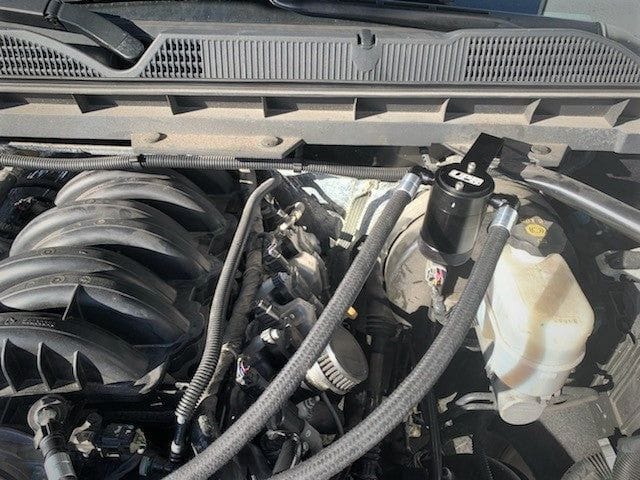
Oil catch can installed with braided lines on a Chevy V8 engine bay.

Browse the complete oil catch can lineup to see all available configurations organized by vehicle.

Your LT V8 Is Building Carbon Right Now

Every mile on a 5.3L or 6.2L without a catch can is another cycle of oil vapor recirculating through the intake tract and baking onto the valve faces. UPR's billet aluminum, Plug N Play™ kits intercept that contamination at the source with a 4-stage diffuser and stainless steel coalescing media that generic cans simply can't match. Find the right kit for your Chevy or GMC and install it in under an hour.

Frequently Asked Questions About Chevy and GMC Oil Catch Cans

Do I need a catch can on my Silverado?

The 5.3L and 6.2L LT V8 engines in the Silverado are direct-injection, meaning fuel enters the cylinder directly and doesn't pass through the intake ports. That design produces no fuel wash on the intake valves, and oil vapor from the PCV system continuously recirculates through those ports, depositing carbon on the valve faces over time. A catch can intercepts that vapor before it reaches the intake. It's not a required maintenance item, but it's one of the most cost-effective ways to extend the valvetrain's service life and avoid walnut blasting down the road. Silverado owners who have done their first drain after 5,000 miles on a new can can see exactly what would have otherwise gone into the intake.

Does a 5.3L need an oil catch can?

The Gen V 5.3L LT is one of the stronger arguments for a catch can on any naturally aspirated engine. It's direct-injection with no port spray on the intake valves, it sees a wide range of operating loads from city driving to extended towing, and it's in service on a large number of trucks and SUVs that owners plan to run for 150,000 miles or more. Carbon buildup on direct-injection intake valves is a documented and predictable problem on this engine, not a hypothetical. The 5.3L doesn't need a catch can to run; it needs one to keep running cleanly at high mileage without an expensive induction service.

Is an oil catch can worth it on a GM truck?

For 5.3L and 6.2L LT-equipped trucks that see regular towing, hauling, or high-mileage daily driving, yes. These engines are direct-injection, which means every crankcase blow-by event sends oil vapor directly through the intake ports with nothing to counteract the accumulation on the valve faces. The longer the truck runs without a catch can, the more carbon builds up, and the less efficiently the intake valves seal and flow. A UPR billet catch can kit costs a fraction of a professional induction cleaning service, installs in under an hour, and addresses the source of the problem rather than cleaning up the result every few years.

How often should I drain my catch can on a Silverado?

The general recommendation is to check and drain Silverado oil catch cans at every oil change interval, typically every 5,000 to 7,500 miles, depending on your service schedule. On Silverados used for regular towing, hauling, or hard driving, crankcase pressure spikes under load push more blow-by through the system, and the can may fill faster than on a truck used exclusively for light street driving. Checking it at each oil change takes less than a minute and tells you exactly how hard the engine has been working. UPR's Plug N Play™ quick-release fitting system lets you pull, drain, and reinstall the can without removing engine covers or disconnecting any hoses.